
Blog
How Do You Legalize an After-the-Fact Room Addition in FL?
Built a room without a permit? Learn how after-the-fact room addition permitting works in Florida: documents, inspections, costs, and next steps.
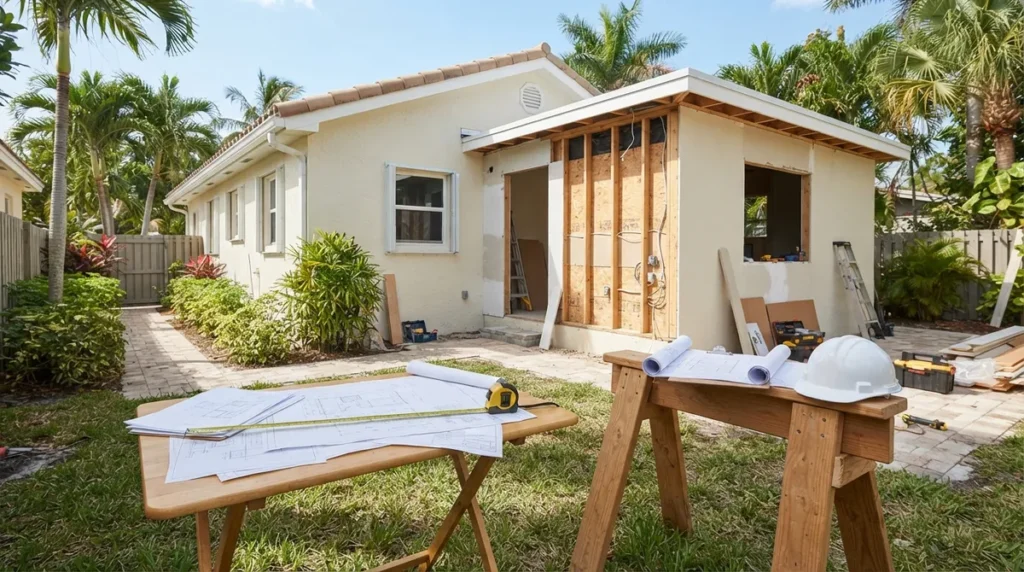
Key Takeaways
-
An after-the-fact room addition permit lets you legalize work built without a permit, but approval is not automatic and the building official may require corrections or even removal of non-compliant work.
-
Florida has no uniform statewide after-the-fact procedure or fee, so your first step is confirming which city or county building department has jurisdiction over your parcel.
-
Prepare as-built drawings, a site plan, proof of ownership, and a completed application, and have a Florida-licensed engineer evaluate any concealed framing, foundations, or structural components.
-
Inspectors may require opening walls or ceilings, or accept an engineer's field verification in place of demolition, so budget for possible inspection openings and corrective work.
-
Some local fee schedules double permit fees for work started without a permit, and paying the penalty does not waive code compliance, so verify the current schedule for your jurisdiction.
-
A building permit does not resolve zoning, setback, floodplain, or HOA issues, so check those separately; a non-compliant addition may need a variance or modification.
Picture this: you're finally ready to sell, refinance, or file an insurance claim, and someone notices that the sunroom, bonus room, or garage-turned-bedroom was never permitted. Your stomach drops. If that sounds familiar, take a deep breath. You're far from alone, and there is a real, well-worn path forward.
An after the fact room addition in Florida is simply an addition that was built before the required building permit was pulled. The good news? Many local building departments offer a corrective permitting process to review that work. The honest news? Approval isn't automatic, and the rules, fees, and timelines vary quite a bit by city and county.
Whether you're a homeowner who inherited the problem, a realtor staring down a closing deadline, or a general contractor cleaning up a past job, this guide walks you through what to expect in 2026. We'll cover who handles the permit, what documents you need, how inspections work, and what it may cost. Let's get you from stressed to organized.
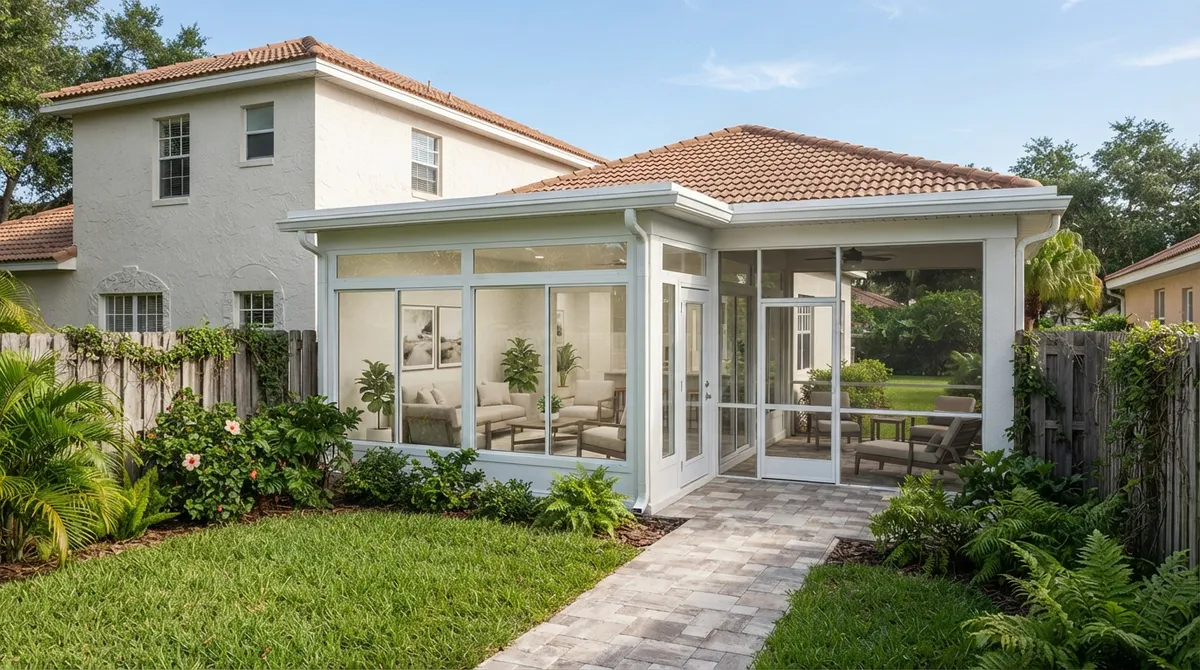
What Is an After-the-Fact Permit for a Room Addition?
An after-the-fact (ATF) permit is a local process for reviewing construction that was completed before a required permit was obtained. Think of it as asking the building department to take a look at work they never got to see while it was being built.
Here's the key thing to understand: applying does not automatically legalize the addition. The building official may require documentation, inspections, corrections, or even removal of work that can't be brought into compliance. That's why going in prepared makes such a difference.
Does a Room Addition Require a Permit in Florida?
Almost always, yes. Florida Statutes §553.79 generally requires a permit from the appropriate local enforcing agency before constructing, enlarging, altering, modifying, repairing, or demolishing a building. A room addition enlarges the structure, so it will generally require a permit. If you think an exemption might apply, confirm it with your local authority having jurisdiction before assuming anything.
Is There a Statewide After-the-Fact Process?
No. Florida Statutes provide the general permit requirement, but they don't create one uniform statewide ATF procedure or fee. Each local jurisdiction sets its own application steps, fee schedule, and enforcement approach. That's exactly why a Miami-Dade project can feel very different from one in Sarasota or Hillsborough County.
Which Office Handles Your Room Addition Permit?
Before you fill out a single form, figure out who actually has jurisdiction over your property. It might be a city building department, or it might be the county. Properties near city lines can be surprisingly tricky, and applying with the wrong office wastes weeks.
You can start with our building department lookup tool to point you in the right direction. If you're still unsure, our guide on which Florida jurisdiction reviews your project breaks it down.
| Jurisdiction Type | Who Typically Handles It | What to Verify First |
|---|---|---|
| Incorporated city | City building department | Current ATF application instructions and fee schedule |
| Unincorporated area | County building department | County-specific forms and review process |
| City/county boundary properties | Depends on exact parcel location | Confirm jurisdiction before applying |
| HOA or deed-restricted community | Local building department plus the HOA | Separate HOA approval may still be required |
Because rules differ so much, many owners lean on local experts. We serve all 67 counties, including Hillsborough County, Miami-Dade County, and Sarasota County, so we know how these offices tend to operate.
What Documents Do You Need for an After-the-Fact Room Addition?
Every jurisdiction has its own checklist, but a typical after the fact room addition Florida application may include the following:
- A completed after-the-fact permit application form
- Proof of ownership
- A site plan or survey showing where the addition sits on the lot
- As-built drawings showing the addition's dimensions and construction
- Structural, electrical, plumbing, or mechanical details, if required by the reviewer
- Signed and sealed documents from a Florida-licensed architect or engineer, when the local reviewer requires them
Whether sealed plans are required is a local decision. In practice, many reviewers want an engineer to verify what's hidden behind finished walls. Our as-built drawings service and site plans service cover the documents most reviewers ask for first.
When Do You Need an Engineer Letter?
If framing, connections, or foundations are concealed, a licensed engineer may need to evaluate the work and issue a letter confirming it meets code. That's where structural engineering and engineer letters come in. Because our drafting and engineering are in house and our own engineer seals the work, reviewer comments get answered quickly instead of bouncing between outside consultants.
How Does the After-the-Fact Permit Process Work Step by Step?
While every office does things a little differently, most after the fact room addition projects in Florida follow a similar rhythm. Here's the general flow:
- Confirm jurisdiction. Identify whether the city or county controls your parcel.
- Research open permits and violations. Check for any existing permit history or code cases using an open permit search.
- Document the addition. Measure and photograph the room, and gather any receipts, contractor information, or prior records.
- Prepare as-built plans and a site plan. Show exactly what was built and where.
- Get engineering if needed. Have a Florida-licensed engineer evaluate hidden or structural components.
- File the application. Submit the packet and pay the required fees.
- Respond to review comments. Reviewers often ask for revisions or clarifications.
- Complete inspections and corrections. Schedule inspections and fix anything flagged.
- Close out the permit. Get final approval so the record is clean.
It sounds like a lot, and it can be. That's the reason many owners hand off the filing, tracking, and comment responses to a team that does this daily. Our permit facilitation and filing and plan review coordination services are built for exactly this.
Will Inspectors Make You Open Walls or Ceilings?
This is the question that keeps homeowners up at night, so let's talk about it plainly. Finished walls and ceilings can hide framing, connections, wiring, plumbing, and HVAC work. Because inspectors can't verify what they can't see, they may require portions of the construction to be exposed or otherwise verified.
That might mean cutting small inspection openings, removing a section of drywall, or using an engineer's field verification in place of full demolition. What's required depends on the building official and the type of work involved.
| Hidden Element | What an Inspector May Want to Verify | Possible Approach |
|---|---|---|
| Wall and roof framing | Sizing, spacing, connections | Inspection openings or engineer verification |
| Electrical wiring | Proper circuits, boxes, grounding | Exposed sections and a licensed electrician's review |
| Plumbing | Piping, venting, connections | Pressure testing or limited exposure |
| HVAC | Equipment sizing and ductwork | Documentation and mechanical review |
| Foundation or slab | Footing depth, reinforcement | Engineer evaluation or testing |
Our team coordinates this on your behalf through inspections support, and in some cases we can perform review as a licensed private provider. If you're curious about that route, see how a private provider can help with an after-the-fact permit.
How Much Does an After-the-Fact Room Addition Permit Cost?
There is no single statewide price. Florida law lets local permitting agencies set reasonable permit fees, so your cost depends on your jurisdiction and the size and scope of the addition.
One thing many owners don't expect: some local fee schedules add a penalty when work started before a permit was obtained. For example, St. Lucie County's published fee schedule states that fees for work started before obtaining a required permit are doubled. That's a local example, not a statewide rate, so always check the current schedule for your own jurisdiction.
What Goes Into the Total Cost?
- Permit and review fees, which may be doubled or increased for work started without a permit
- Drafting costs for as-built plans and a site plan
- Engineering fees for inspection, evaluation, and sealed letters
- Corrective work if inspectors find items that don't meet code
- Reinspection fees if the first inspection doesn't pass
Paying the higher fee doesn't waive code compliance or other penalties, which is worth remembering. For a deeper dive, check out our breakdown of after-the-fact permit costs in Florida and what it costs to legalize a Florida addition.
Does a Building Permit Also Fix Zoning and Setback Problems?
Not necessarily, and this is a big one. Building-permit approval should not be assumed to resolve separate zoning, floodplain, utility, or homeowners association issues. A room addition has to satisfy building-code requirements and land-use rules such as setbacks, lot coverage, and other site restrictions.
Imagine you add a 300-square-foot room that sits closer to the property line than your zoning allows. The structure might be perfectly built, yet the zoning office could still object. In that case you may need a variance or other relief, or the addition may need to be modified.
Flood zones add another layer. If your property is in a regulated flood zone, the size of the addition relative to your home's value can trigger additional requirements. It's worth reading up on the FEMA 50 percent rule in Florida if you're near the coast or a flood-prone area.
Can the City or County Make You Remove the Addition?
Yes, it's possible. If the work can't be brought into compliance with the building code, or it violates zoning in a way that can't be resolved, a building official may require correction or removal. That outcome isn't the norm for well-built additions that simply missed a permit, but you should know it's on the table.
The best way to lower that risk is to move proactively. Voluntarily coming forward with a solid, well-documented application usually goes more smoothly than waiting for a neighbor complaint or a code enforcement notice. If you've already received a notice, our code compliance violations team can help you respond. You can also read about the penalty for building without a permit in Florida.
Tips for Each Type of Reader
Your angle on this problem depends on who you are. Here's how different readers can approach an after the fact room addition in Florida:
- Homeowners: Gather every record you can, then start with jurisdiction and as-built drawings. Our homeowner services are designed to guide you step by step.
- Realtors and investors: Permit issues can stall a closing fast. Early research and a realistic timeline protect your deal. See how we support realtor and closing support.
- General contractors: If a past job slipped through unpermitted, cleaning it up protects your license and reputation. Learn more on our general contractors page.
- Architects, designers, and trades: If you only need drawings, our drafting-only service lets you keep your own seal and your own client relationship.
How Long Does the Process Take?
Timelines swing widely. A simple, clean packet in a fast-moving jurisdiction might move in a few weeks, while an addition with structural questions, zoning issues, or multiple rounds of comments can take months. The biggest delays usually come from incomplete drawings, missing documents, and unanswered reviewer comments.
For general expectations on review speed, our guide on how long a building permit takes in Florida is a good companion read. And if a closing is on the clock, our urgent permit rescue service is built for tight deadlines.
Why Work With a Florida Permitting Team?
Legalizing an addition touches drafting, engineering, filing, tracking, inspections, and sometimes zoning. That's a lot of moving parts for one person to juggle. 1 Contractor Solutions acts as Florida's outsourced permitting department: we figure out which jurisdiction controls your project, prepare the plans, file the application, work every reviewer comment, and carry it through closeout. We answer 24/7 and respond within 30 minutes, day or night.
Don't just take our word for it. You can visit us on Google — 1 Contractor Solutions to see what customers say, and you can follow us on LinkedIn or follow us on Facebook for Florida permitting updates. For the statutory basis of the permit requirement, you can review Florida Statutes §553.79 directly.
Ready to Legalize Your Addition?
An unpermitted room addition feels heavy, but it's a solvable problem. The path is clear: confirm your jurisdiction, document what exists, prepare as-built plans, get engineering where needed, and work through review and inspections with patience. Stay realistic about fees and timelines, and don't assume building approval settles zoning or HOA questions.
You don't have to untangle it alone. If you're ready for a clear plan and a team that handles the paperwork, get a free quote from 1 Contractor Solutions today, and let's get your addition on the record the right way.
FAQs
Do I need an after-the-fact permit for a room addition in Florida?
If your room addition was built without a permit, you'll generally need to work with your local building department to address it. Florida Statutes §553.79 requires a permit before enlarging a building, so a room addition will typically need one. Check with your city or county to confirm the exact process.
Can a Florida building department make me tear down an unpermitted addition?
It's possible if the work can't be brought into compliance with the building code or zoning rules. Most well-built additions can be corrected and permitted, though, especially when you come forward with solid as-built drawings and engineering. The sooner you start, the more options you tend to have.
Will inspectors make me open my walls or ceilings?
Sometimes. Since finished surfaces can hide framing, wiring, plumbing, and HVAC work, inspectors may require portions to be exposed or verified another way, such as an engineer's field evaluation. What's required depends on the local building official and the type of work.
Does an after-the-fact building permit fix zoning or setback violations?
No, not automatically. Building-permit approval doesn't resolve separate zoning, floodplain, utility, or HOA issues. If your addition crosses a setback or exceeds lot coverage limits, you may need a variance or other relief in addition to the building permit.
How much does an after-the-fact room addition permit cost in Florida?
Costs vary because each local agency sets its own fees. Some jurisdictions charge additional or doubled fees when work began before a permit was issued, but that's not a uniform statewide rule. Plan for permit fees plus drafting, engineering, and any corrective work.
We do this work every day across all 67 Florida counties. Call (866) 314-6931 and we will tell you what your situation actually requires — including when you do not need us.
Related services
Permit Facilitation & Filing
You have a crew scheduled, a client asking for dates, and a permit sitting somewhere in a queue you cannot see. We file it, w…
See the servicePlan Review Coordination
A permit in plan review is not one queue. On a commercial project it can be six queues, each with its own reviewer, its own c…
See the serviceReady to get your permit moving?
One call tells you which jurisdiction controls your project, what it will take, and what it will cost. Most of the time we can scope it on the phone.